
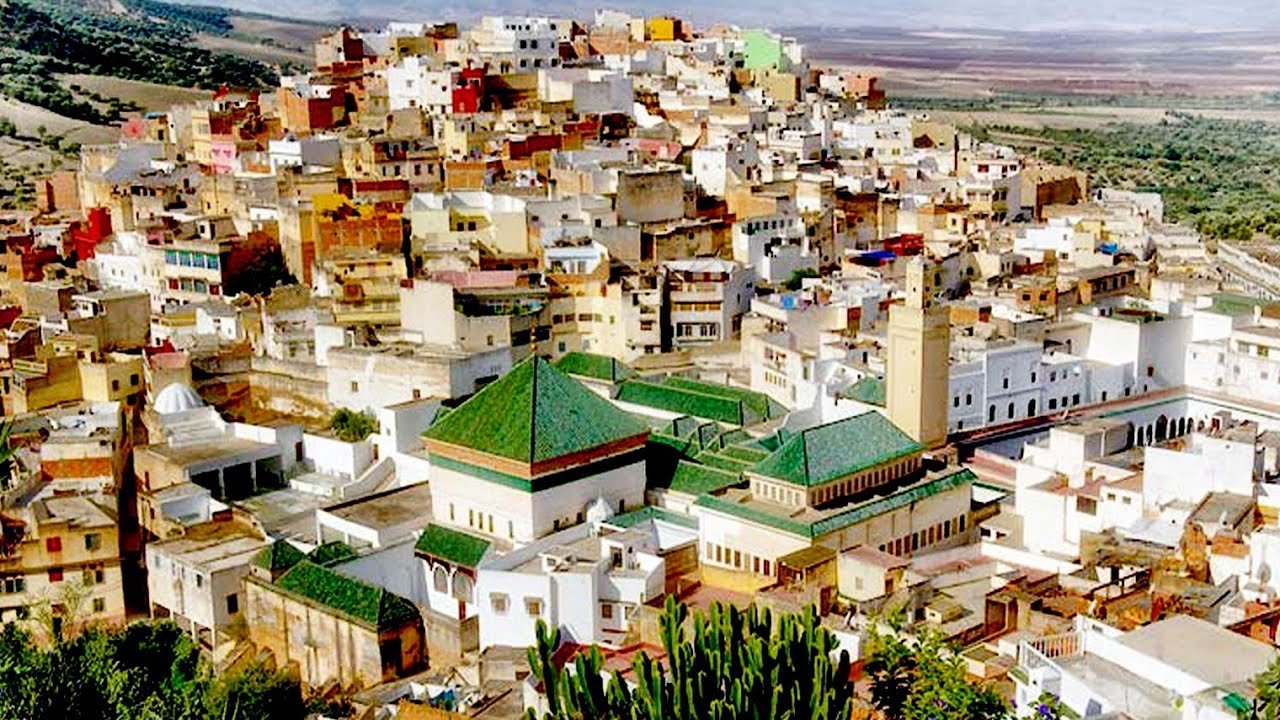
Just on 10 day morocco imperial cities itinerary . Imagine that a land where color is not just a visual detail but the very language of life, a narrative woven into the fabric of its cities, the hues of its landscapes, and the spirit of its people. Morocco is this living canvas, and a journey through its four Imperial Cities such us Marrakech, Fes, Meknes, and Rabat is the ultimate way to experience this spectrum.
This is not merely a trip; it is a visual pilgrimage through history, culture, and an breathtaking explosion of pigments that will forever change your perception of color. Let us embark on a journey to see Morocco not just through our eyes, but through our souls.
10 day morocco imperial cities itinerary
1) Marrakech: The Unapologetic Red of Life and Energy
Your journey into Morocco’s color palette often begins in Marrakech, the “Red City.” This is not a timid, faded red, but a bold, earthy terracotta that blankets the entire medina, as if the very buildings were sculpted from the desert clay.
The color is a constant, warm presence, glowing fiercely under the afternoon sun and softening to a magical blush at dusk. As you step into the legendary Djemaa el-Fna square, the red of the walls becomes a backdrop for a far more vibrant spectacle.Here, the color red transforms into the crimson of fresh pomegranate juice squeezed before your eyes, the scarlet of woven carpets hanging in souks, and the flickering glow of lanterns as storytellers, snake charmers, and musicians take over the square at sunset.
Wandering deeper into the labyrinthine souks, you are enveloped in a sensory overload where the scent of leather and spices mingles with the visual cacophony of rainbow-colored babouches (slippers), intricate silver lamps casting dancing shadows, and mounds of radiant saffron and paprika. The red of Marrakech is the color of passion, chaos, and unadulterated life.
2) Fes: The Deep Blue of Ancient Wisdom and Sacred Craft
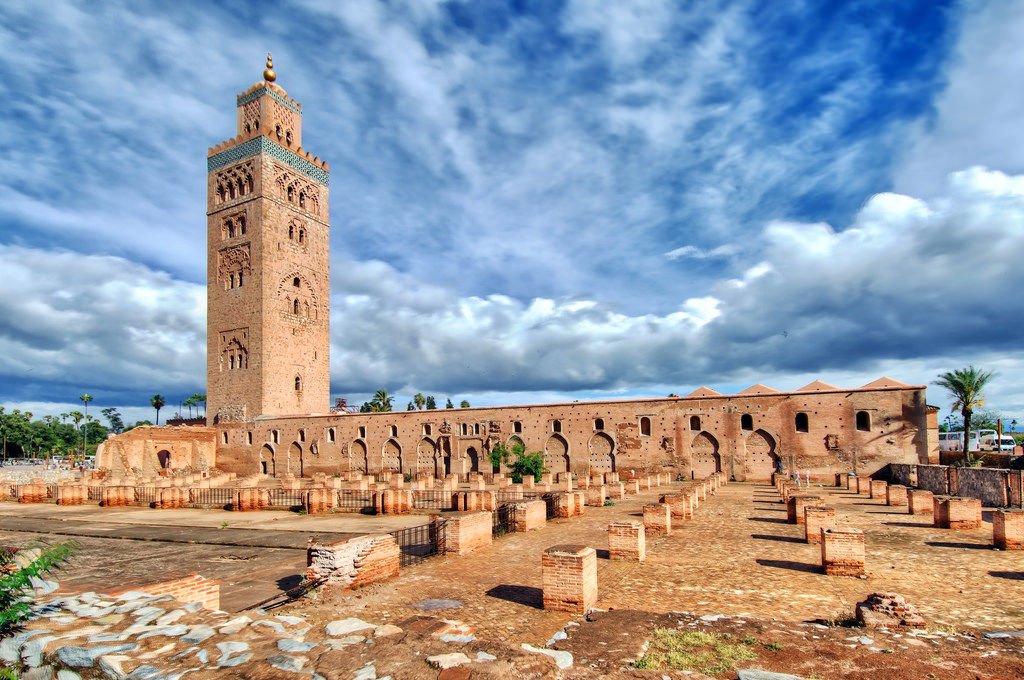
From the fiery energy of Marrakech, we travel to Fes, the intellectual and spiritual capital, which presents itself in a more profound and enigmatic hue: Fes Blue. This captivating shade of cobalt blue, often tinged with hints of indigo and violet, is most famously witnessed in the stunning gate, Bab Bou Jeloud. As you pass through this iconic blue portal, you enter the Fes el-Bali medina, a UNESCO World Heritage site and one of the world’s largest and oldest urban pedestrian zones.
The blue here is not just a color; it is a symbol of the city’s deep connection to spirituality, wisdom, and a revered craft. The origin of this iconic pigment is found in the city’s ancient tanneries, like the famous Chouara Tannery. From the terraces overlooking the stone vats filled with vibrant dyes, you witness a scene unchanged for centuries, where hides are transformed using natural methods.
The Fes Blue itself is traditionally derived from the indigo plant, a precious commodity that spoke of wealth and refinement. This blue echoes throughout the city in the intricate zellij tilework of medersas (theological schools) like Bou Inania, and in the cool, serene courtyards of riads, offering a tranquil respite from the medina’s bustling, honey-colored alleyways.
3) Meknes: The Verdant Green of Imperial Grandeur and Peace :
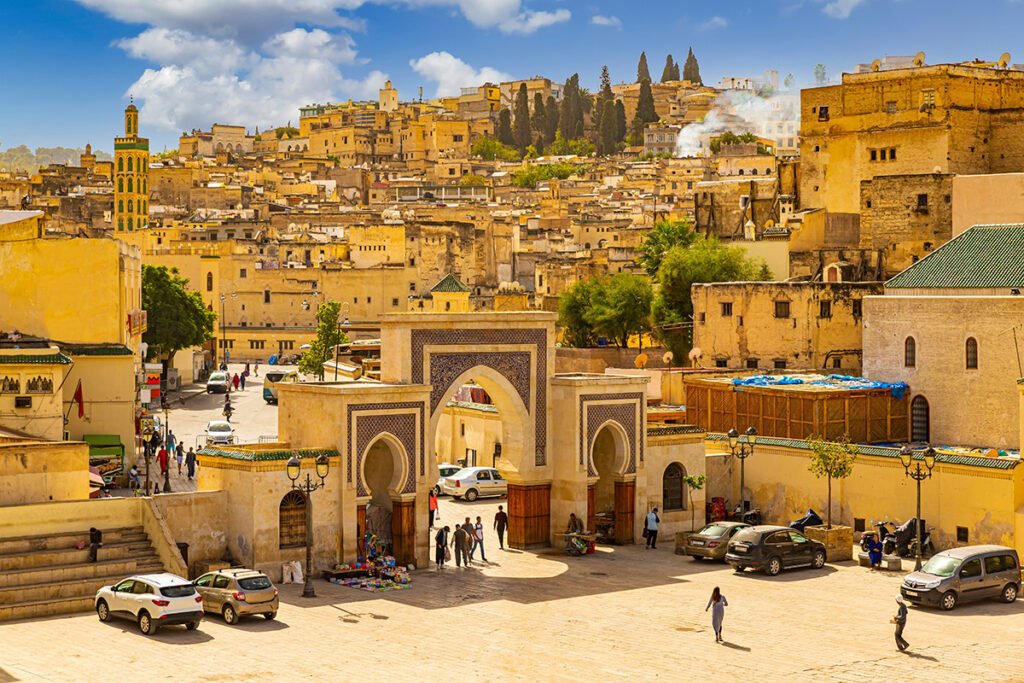
Often overshadowed by its grand neighbors, Meknes offers a different, more regal color story: the color of verdant green. Founded by the formidable Sultan Moulay Ismail, who sought to create a Versailles-like capital in Morocco, Meknes is known as the “City of a Hundred Minarets,” and its green-tiled roofs are a defining feature of its skyline. The most magnificent example is the grand gate, Bab Mansour, a masterpiece of Hispano-Moorish architecture adorned with brilliant green zellij tiles and intricate calligraphy.
This green represents the Islamic association of the color with peace, paradise, and resilience. It speaks of the sultan’s ambition and the city’s historical significance as a powerful imperial seat. Beyond the monumental gates and vast granaries, the green of Meknes manifests in the lush, peaceful gardens and the olive groves that surround the city.
Offering a sense of calm and majestic order that contrasts with the frenetic energy of Marrakech and the dense mystery of Fes.
4) Rabat: The Soothing White and Blue of Coastal Serenity
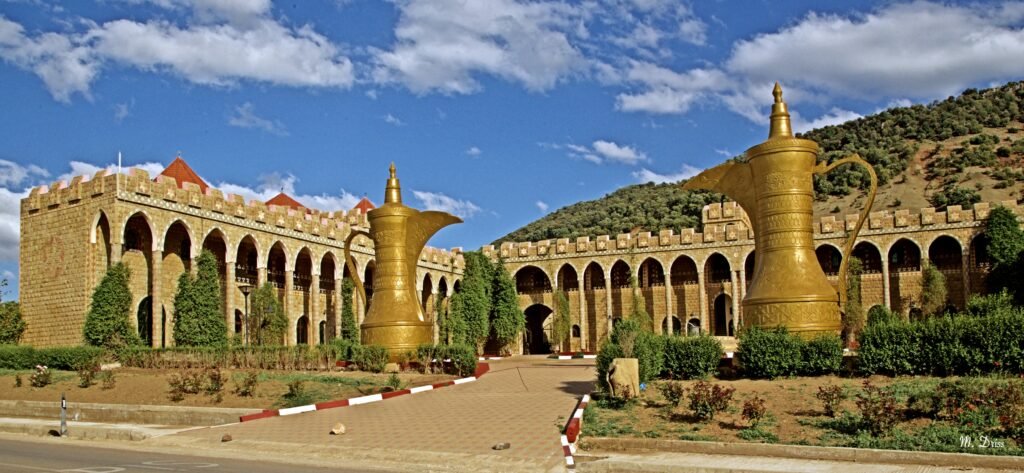
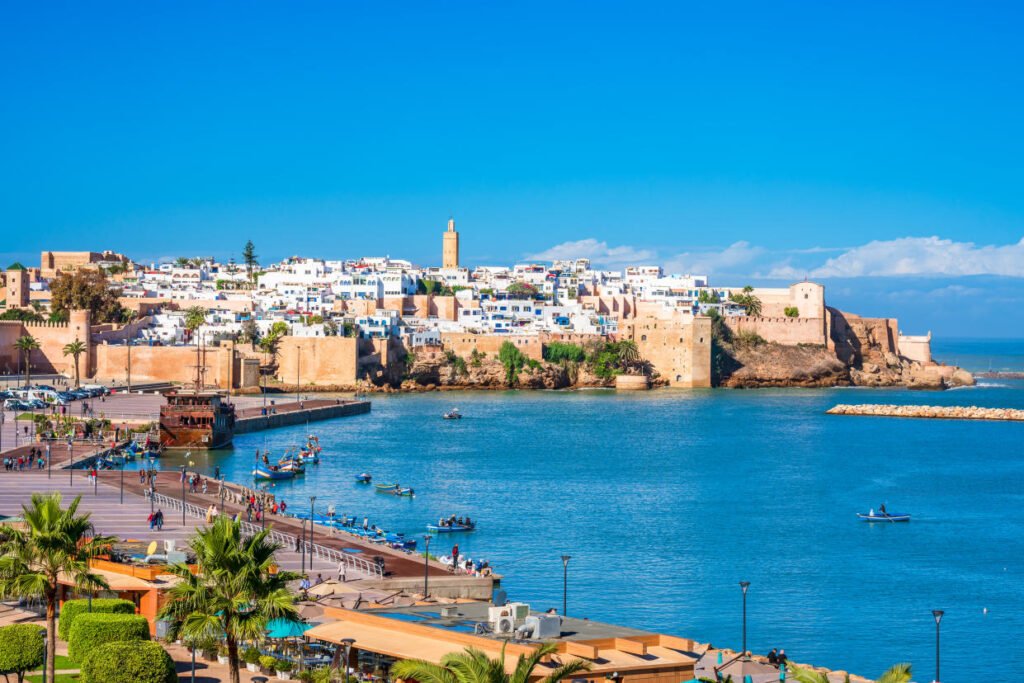
Our color journey concludes in the modern capital, Rabat, where the palette shifts to a calming combination of crisp white and oceanic blue. As the contemporary political center of Morocco, Rabat presents a more orderly and serene vision. The city’s iconic Kasbah of the Udayas is the ultimate expression of this. As you walk through its striking blue and white gateway, you are transported into a serene, almost ethereal village.
The walls are painted a brilliant, blinding white, while the doors, window frames, and stairways are washed in a rich, sky-blue. This Andalusian-inspired color scheme, set against the backdrop of the roaring Atlantic Ocean, creates a feeling of immense peace and cleanliness. Strolling through these quiet, blue-and-white lanes, with the scent of the sea and blooming jasmine in the air, provides a reflective and soothing end to the imperial tour. The white of Rabat symbolizes modernity and clarity, while the blue connects it to the vast, horizon-less Atlantic, representing openness and a forward-looking perspective.
Weaving the Tapestry: Your Journey Through a Living Rainbow
To travel through 10 day Morocco Imperial Cities itinerary is to walk through a living rainbow, where each color tells a story of its history, people, and soul. From the passionate red of Marrakech and the profound blue of Fes to the regal green of Meknes and the serene white-and-blue of Rabat, you don’t just see these colors—you experience them. They stain your memory, inviting you to look beyond the monuments and into the heart of a nation that celebrates life in its most vibrant form. So pack your bags, open your eyes, and prepare to have your world painted in the unforgettable colors of Morocco.
FAQs : 10 day morocco Imperial Cities itinerary
1. What is the best time of year to visit the Imperial Cities for photography?
The ideal times are during the spring (March to May) and autumn (September to November). During these seasons, the light is soft and golden, perfect for photography, and the temperatures are mild for exploring the cities on foot. The spring also brings blooming flowers, adding another layer of color to the landscapes, while the clear autumn skies provide a brilliant backdrop for the vibrant city hues.
2. How many days should I spend to see all four Imperial Cities?
A well-paced trip to cover all four Imperial Cities comfortably would require a minimum of 10 to 12 days. This allows for roughly 2-3 days in each of the main cities (Fes and Marrakech) and 1-2 days for Meknes and Rabat. This itinerary accounts for travel time between cities and provides enough opportunity to immerse yourself in the unique color and character of each location without feeling rushed.
3. What is the most efficient way to travel between the cities?
The most efficient ways are by train or private driver. Morocco’s rail network connects Rabat, Meknes, Fes, and Marrakech reliably and comfortably, offering a chance to see the countryside. For maximum flexibility and the ability to stop at hidden gems along the way (like the Roman ruins of Volubilis), hiring a private driver is highly recommended. Internal flights are an option primarily for connecting directly to Marrakech from the north.
4. Is it easy to find English-speaking guides in these cities?
Yes, especially in the major tourist centers of Marrakech and Fes. Licensed, English-speaking guides are readily available at tourist offices, major hotels, and through reputable tour companies. We highly recommend hiring an official guide for the Fes medina, as its labyrinthine alleys can be particularly challenging to navigate alone, and a guide provides invaluable cultural and historical context.
5. What should I wear to be respectful while also staying comfortable?
The key is to dress modestly while prioritizing comfort for walking. For all genders, loose-fitting, lightweight clothing that covers the shoulders and knees is appropriate and respectful. This also protects you from the sun. Comfortable, closed-toe walking shoes are essential for the uneven and often crowded streets of the medinas. Don’t forget a light scarf or shawl, which is versatile for covering your head when entering mosques, protecting from the sun, or warding off a chill in the evening.
6. Are the Imperial Cities safe for solo travelers, including women?
The Imperial Cities are generally very safe for all travelers, including women traveling alone. Violent crime is rare. However, petty crime like pickpocketing can occur in crowded areas. The primary challenge for solo travelers, particularly women, is dealing with persistent attention from shopkeepers and would-be guides. The best advice is to walk with confidence, learn a few polite but firm phrases in Arabic or French (like “No, thank you” – “La, shukran”), and avoid engaging with touts. Dressing modestly also significantly reduces unwanted attention.
7. Can I use credit cards, or do I need to carry cash?
While larger establishments like hotels, upscale restaurants, and some boutiques in the new parts of the cities (Ville Nouvelle) accept credit cards, cash is king within the medinas and souks. You will need Moroccan Dirhams (MAD) for markets, small cafes, taxis, and tips. It’s best to carry a mix of both, withdrawing cash from ATMs in the modern city districts for the best rates.
8. What is one “can’t-miss” culinary experience in each city?
- Marrakech: Sipping fresh orange juice in Djemaa el-Fna square and dining on a tagine in a rooftop restaurant overlooking the bustling medina.
- Fes: Trying a traditional pastilla, a savory and sweet pie filled with pigeon or chicken, almonds, and spices, a true culinary delicacy of the city.
- Meknes: Sampling the local olives and olive oil, for which the region is famous, often incorporated into many local dishes.
- Rabat: Enjoying fresh seafood at a restaurant in the Kasbah of the Udayas or along the Bouregreg River, with stunning views of the water.