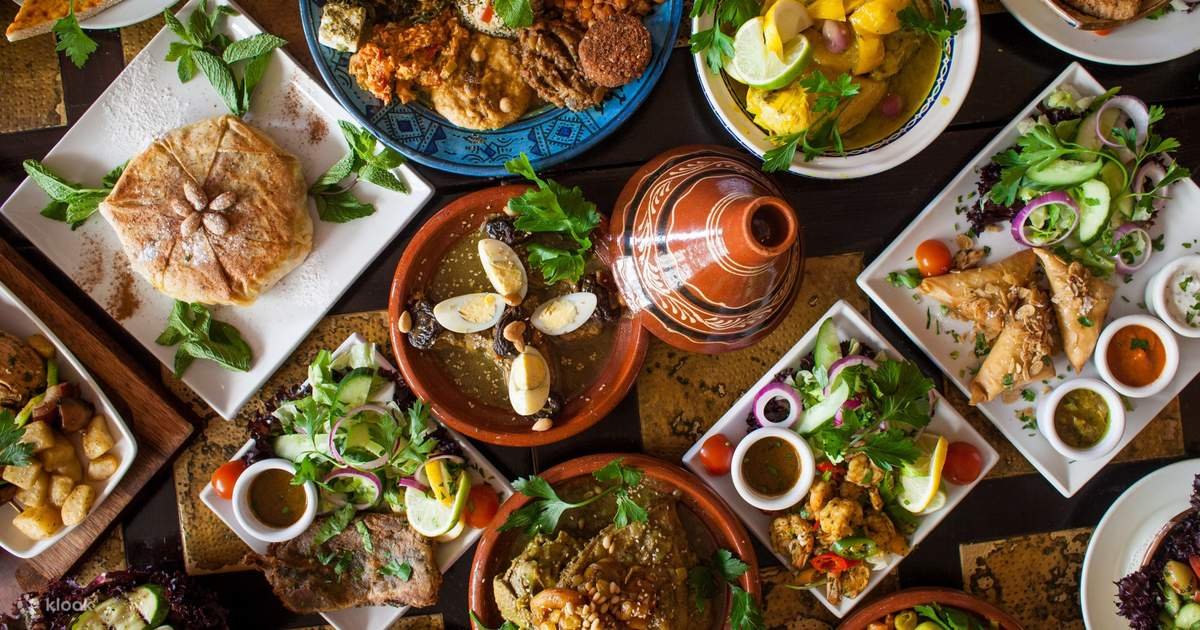
Moroccan food guide or Must-try dishes in Morocco . it is a vibrant tapestry woven from centuries of trade, tradition, and terrain. Nestled between the Atlantic Ocean, the Mediterranean, and the Sahara Desert, Traditional Moroccan cuisine reflects its geographic and cultural crossroads—Berber sustenance meets Arab spice routes, Andalusian refinement, and French colonial influence. Every dish tells a story: slow-cooked tagines whisper of communal gatherings in marrakech in addition to saffron-infused Authentic Moroccan couscous restaurants honors Friday family rituals, and bustling street food stalls pulse with the energy of the medinas sush us marrakech , fes, rabat , casablanca.
There are three pilare that makes moroccan food are the best : moroccan spices
- Spice Alchemy – Ras el hanout (a 30-spice blend), cumin, and cinnamon transform simple ingredients into complex flavors.
- Slow Mastery – From clay-pot tagines to overnight-fermented msemen (flatbread), patience is key.
- Sweet-Savory Balance – Think honey-drizzled pastilla or dates stuffed with almond paste.
1. Tagine:
No trip to Morocco is complete without trying a tagine, named after the conical clay pot it’s cooked in. This slow-cooked stew combines tender meat (chicken, lamb, or beef) with vegetables, dried fruits, and aromatic spices like saffron, cumin, and cinnamon. Vegetarian versions with eggplant, carrots, and chickpeas are also popular.
Where to eat tagine in Marrakech
- Dar Cherifa & chez fatima (Marrakech) – A historic riad serving authentic tagines in Jemaa el-Fnaa.
- Le Tarbouche (Fez) – Known for its rich, flavorful tagines in the heart of the medina.
- Dar Dasha (Essaouira) – Specializes in seafood tagines, a coastal twist on the classic 16.
2. Couscous :
Couscous is more than just a side dish it’s a Friday tradition , often served with a hearty vegetable or meat stew. Made from hand-rolled semolina, it’s steamed to perfection and topped with a fragrant broth. Some versions include sweet additions like raisins and cinnamon for a unique flavor contrast.
Authentic Moroccan couscous restaurants :
- Restaurant Kebdani (Tangier) – Famous for its fluffy couscous paired with lamb or chicken.
- Riad Fes (Fez) – Offers a refined take on this Berber staple.
- El Bahia (Rabat) – A local favorite for traditional couscous dishes 19.
3. Harira: The Hearty Ramadan Soup
Harira is a comforting lentil and chickpea soup, often enjoyed during Ramadan to break the fast. Made with tomatoes, herbs, and sometimes lamb, it’s a nutritious and flavorful starter.
Where to find harira soup in Casablanca
- Café Caravan (Marrakech) – Serves a rich, spiced version.
- Heure Bleue (Essaouira) – A seaside spot with a delicious take on harira .
4. Pastilla: A Sweet-Savory Delight
Pastilla (or b’stilla) is a flaky pastry filled with pigeon (or chicken), almonds, and spices, then dusted with powdered sugar and cinnamon. This Fes-originated dish is a must-try for its unique blend of flavors
Moroccan pastilla
- Dar Roumana (Fez) – Serves the classic pigeon pastilla.
- La Sqala (Casablanca) – Offers a seafood version for coastal flair .
5. Street Food Favorites
Morocco’s street food scene is vibrant and affordable. Don’t miss:
- Maakouda – Deep-fried potato balls, best enjoyed in Marrakech’s Jemaa el-Fnaa.
- Merguez – Spicy lamb sausages, often grilled at market stalls.
- Snail Soup – A Marrakech specialty, believed to aid digestion .
6. Moroccan Sweets & Moroccan mint tea :
Amlou – A nutty almond spread, Morocco’s answer to Nutella
Mint Tea – Served ceremonially, often poured from a height at Café Majorelle (Marrakech).
Chebakia – Honey-drenched sesame cookies, popular during Ramadan.
Berber Cuisine: A Culinary Journey Through Morocco’s Indigenous Heritage
Berber cuisine, the foundation of Moroccan gastronomy, reflects the traditions of North Africa’s indigenous Amazigh people. Rooted in simplicity, sustainability, and bold flavors, it relies on locally sourced ingredients like grains, legumes, olives, and aromatic spices. Here’s a deep dive into its key elements, dishes, and cultural significance:
A) The Essence of Berber Cuisine :
- Ancient Roots: Berber cooking dates back millennia, shaped by the rugged Atlas Mountains and Saharan oases. It emphasizes slow cooking, communal meals, and seasonal ingredients .
- Staple Ingredients:
- Grains: Barley, millet, and hand-rolled couscous (the national dish of Morocco) .
- Legumes: Chickpeas, lentils, and fava beans (e.g., Bisara, a hearty fava bean soup).
- Spices: Cumin, coriander, and saffron, often blended into Ras el Hanout .
B) Regional Variations :
- Atlas Mountains: Hearty dishes like Amlou (almond-argan nut spread) and barley soups .
- Sahara Berber: Dates, goat meat, and Medfouna (stuffed “sand bread”) dominate .
- Coastal Areas: Fish chermoula (herb-marinated seafood) reflects Mediterranean influences .
C) Cultural Significance :
- Hospitality: Offering mint tea and communal tagines symbolizes Berber values of generosity .
- Festivals: Dishes like Chebakia (honey-dusted cookies) are central to Ramadan and weddings

D) Where to Experience Berber Cuisine :
Cooking Classes: Learn to make couscous in Fez or tagines in Marrakech .
Souk Stalls: Try Zaalouk (eggplant dip) or Sfenj (fried doughnuts) in local markets .
Conclusion :
Berber cuisine is a living testament to Morocco resilience and creativity. Each bite whether a humble lentil soup or a festive Mechoui tells a story of the land and its people. B’ssaha it means (To your health.
This guide isn’t just about eating . it’s about tasting history. Let’s explore the dishes that define Morocco, and the places where they’re perfected. contact us for a unforgattable tour around morocco.